How to build a business website for free
You need a website for your business, and you’d rather not spend money before you’ve made any. That’s a completely reasonable place to start – and despite what some guides suggest, it’s genuinely possible to build a professional-looking business website without spending a penny.
This guide covers exactly how to build a business website for free, what the real limitations of “free” are, and when it makes sense to start paying – with US and UK costs shown side by side for the upgrade path, once you get there.

What “free” actually gets you
Before diving into the how-to, it’s worth being clear about what free website building genuinely includes – and what it doesn’t.
What you typically get for free:
- A working website with your content live and publicly accessible
- A drag-and-drop or guided editor
- A handful of customisable templates
- Basic contact forms and business information display
- Hosting included (you don’t pay for hosting separately)
What you typically don’t get for free:
- A custom domain name (you’ll have something like yourbusiness.wixsite.com rather than yourbusiness.com)
- Removal of the platform’s own branding/ads on your site
- Full design customisation
- Advanced business features (booking systems, advanced ecommerce)
Free is a genuine starting point, not a permanent professional solution — but it’s a perfectly sensible way to get online while you validate your business idea or save towards a paid setup.

Step 1 – Choose your free platform
Wix (free plan) – best for fast setup
Wix’s free plan is the fastest route to a live business website. The drag-and-drop editor is the most beginner-friendly available, and Wix ADI (their AI builder) can generate a complete starting site from a short description of your business.
What you get free: A wixsite.com subdomain, Wix’s templates, basic business features (contact forms, Google Maps embedding, opening hours display).
WordPress.com (free plan) – best if blogging matters
If your business website will include regular content — a blog, news updates, articles — WordPress.com’s free plan gives you a better writing and publishing experience than Wix.
What you get free: A wordpress.com subdomain, a selection of free themes, basic customisation.
Squarespace (free trial only) – best design, time-limited
Squarespace doesn’t offer an indefinite free plan – only a 14-day trial. If you want Squarespace’s design quality specifically, you’ll need to build during the trial and either publish within that window on a paid plan, or treat the trial as a way to test the platform before committing.
Quick comparison
| Wix free plan | WordPress.com free plan | Squarespace | |
|---|---|---|---|
| Cost | Free indefinitely | Free indefinitely | 14-day trial only, then paid |
| Best for | Fast setup, local/service businesses | Content-heavy sites, blogs | Design-led businesses |
| Default URL | yourbusiness.wixsite.com | yourbusiness.wordpress.com | N/A – trial requires upgrade to publish long-term |
| AI builder available | Yes (Wix ADI) | No | Yes (Blueprint), paid only |
| Storage/bandwidth limits | Yes, modest | Yes, modest (3GB storage) | N/A on free trial |

Step 2 – Plan your site structure before you start
Spend ten minutes planning before you open the editor. A typical small business website needs:
Home page – who you are, what you offer, and a clear next step (contact, call, book)
About page – your story, why customers should trust you
Services or products page – what you offer, with enough detail to answer common questions
Contact page – phone, email, address, contact form, opening hours if relevant
(Optional) Testimonials or reviews page – social proof from existing customers
Having this structure in mind before you start building saves significant time compared to figuring it out as you go.

Step 3 – Choose a template and customise it
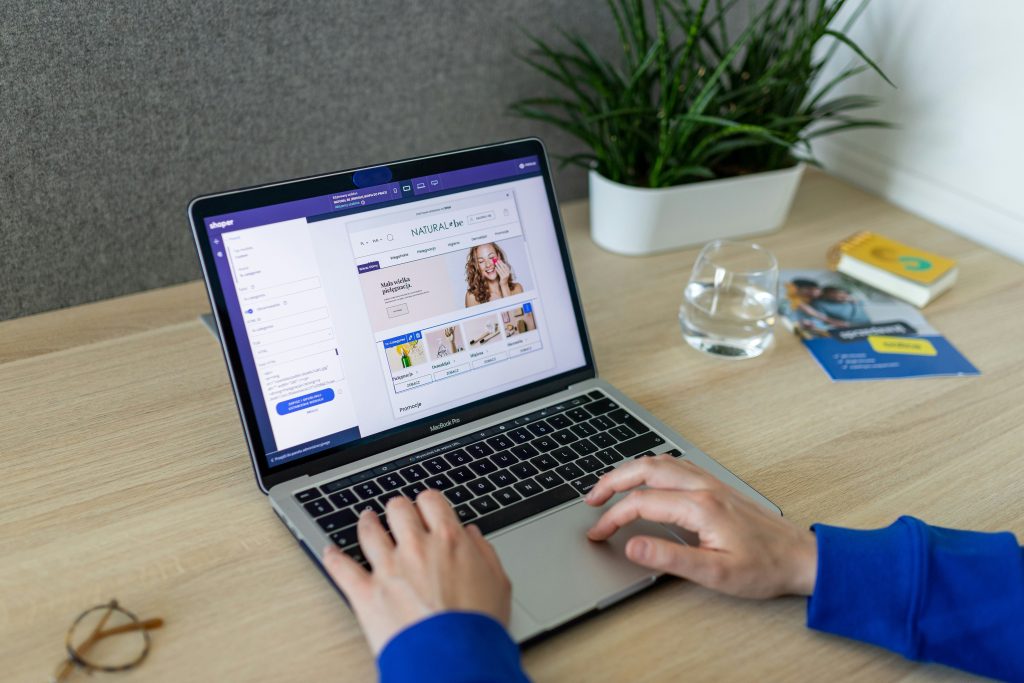
Whichever platform you choose, pick a template designed for your business type if one’s available – most platforms have categorised templates (restaurants, salons, trades, consultants, retail).
Customisation priorities, in order:
Your logo or business name – clearly visible in the header, consistently used throughout.
Your core message – the headline on your homepage should communicate what you do and who it’s for within seconds. “We fix boilers across Manchester, same-day service” beats “Welcome to our website.”
Clear contact information – make it effortless for someone to get in touch. Phone number and contact form should be visible without scrolling on most pages.
Photos that represent your actual business – free stock photos are better than nothing, but real photos of your work, your premises, or your products build more trust. Even a phone-camera photo of genuine work beats generic stock imagery.
Step 4 – Write clear, simple copy
You don’t need to be a professional copywriter. You need to be clear.
For your homepage: What do you do, who is it for, and what should they do next (call, book, enquire)? Three sentences can cover this.
For your services/products: Specific descriptions beat vague ones. “Boiler servicing, repairs, and installation – same-day callouts available” is more useful than “Quality heating services you can trust.”
For your about page: Why you started the business, what makes your approach different, and any relevant experience or qualifications that build trust.
Throughout: Write the way you’d talk to a customer in person. Avoid jargon. Keep sentences short.

Step 5 – Add the essentials
Before considering your free site complete, make sure you’ve covered:
Contact form – most free builders include this. Test it yourself to confirm submissions actually arrive in your inbox.
Google Maps embed – if you have a physical location or service area, embedding a map helps customers understand where you operate.
Social media links – if you’re active on Instagram, Facebook, or LinkedIn, link to them. It builds credibility and gives potential customers another way to learn about you.
Opening hours – if relevant to your business, display these clearly.
A clear call to action – every page should have an obvious next step for the visitor. “Call now,” “Get a quote,” “Book online” – whatever fits your business.

Step 6 – Publish and share
Once your site is built, publish it and start sharing it — your social media profiles, your email signature, business cards, and anywhere else potential customers might look for you.
The honest limitations of going free
Your URL won’t look professional. yourbusiness.wixsite.com/yourbusiness is noticeably less credible than yourbusiness.com. For a serious business, this is the single biggest reason to eventually upgrade.
Platform branding appears on your site. Free plans typically show “Made with Wix” or similar branding, which signals to visitors that you haven’t invested in your business presence.
Limited storage and bandwidth. Free plans cap how much content and traffic you can have. For a small local business this rarely matters in the early stages.
SEO is restricted. Free plans often limit SEO customisation — meta titles, descriptions, and structured data – which can affect how well your site performs in Google search results.

When to upgrade from free
The honest signal to upgrade isn’t a specific time period – it’s when free is actively costing you business.
Upgrade when:
Customers comment on or question your unprofessional-looking URL. You’re losing potential trust because of platform branding. You need features the free plan restricts (online booking, ecommerce, more storage). You’re generating enough business that the cost of a custom domain (~$12–$15/year in the USA or ~£10–£15/year in the UK) and a paid plan (~$12–$19/month in the USA or ~£9–£15/month in the UK on most platforms) is clearly justified by the credibility gain.
The minimum upgrade worth making: Even if you stay on a free-tier platform otherwise, adding a custom domain is usually the single highest-value upgrade – it immediately removes the most visible signal of an unfinished, unprofessional web presence.

An alternative path – self-hosted WordPress on a budget
If you know your business is going somewhere and you want a more durable foundation from the start, self-hosted WordPress is worth considering even on a tight budget.
Hosting from Hostinger starts around $2/month introductory (USA) or £1.50/month (UK), and a domain costs roughly $12–$15/year (USA) or £10–£15/year (UK). For around $40–$52 (USA) or £30–£40 (UK) total in year one – not free, but close to it – you get a custom domain, no platform branding, complete design flexibility, and a foundation that scales with your business indefinitely.
Read our guide: How to start a WordPress website for beginners →
For a business that’s confident it’s staying around, this small upfront investment avoids the rebuild that often comes with outgrowing a free platform.

Frequently asked questions
How do I build a business website for free?
Choose a free platform (Wix or WordPress.com are the strongest options), plan your site structure, pick a template suited to your business type, customise it with your logo, message, and contact details, write clear copy, add the essentials like a contact form and map, then publish. See the step-by-step breakdown above for the full process.
Can I really build a business website for free?
Yes – Wix and WordPress.com both offer genuine free plans that produce a working, publicly accessible website. The trade-offs are a non-custom URL, platform branding, and some feature restrictions, but for getting started, free is a real option.
Which free platform is best for a local business?
Wix is generally the best starting point for a local service business — fast setup, business-specific features like Google Maps embedding and opening hours, and the largest selection of business-type templates.
Do I need to pay anything at all?
No – if you’re comfortable with a wixsite.com or wordpress.com style URL and some platform branding, you can run a complete free website indefinitely. Most businesses choose to upgrade once they’re established enough that a custom domain becomes worthwhile.
How long does it take to build a free website?
With a clear plan, a simple business website can be built in 2-4 hours using a free Wix or WordPress.com plan, including writing your own copy and customising the template.
Is a free website good enough for SEO?
Basic SEO works on free plans, but customisation is limited. For a business relying significantly on Google search for new customers, the SEO limitations of free plans (and free subdomains specifically) are a meaningful reason to consider upgrading sooner rather than later.
Can I sell products on a free business website?
Not meaningfully. Free plans on Wix and WordPress.com either block ecommerce entirely or restrict it to a handful of manual product listings with no proper checkout. If selling online is part of your business from day one, it’s worth looking at a low-cost paid plan or self-hosted WooCommerce rather than trying to make a free plan do a job it isn’t built for.
Howtostartyourwebsite.com may get paid commission for purchases made after clicking a link on this page. This website is for inspiration purposes only. The content provided is meant to spark creativity and ideas, not to serve as professional advice or as endorsement.